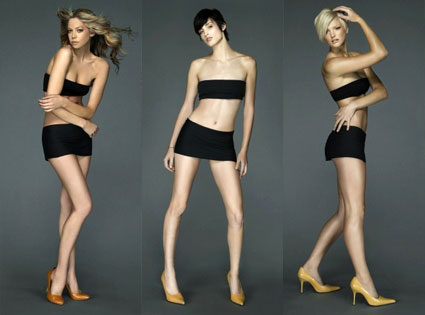
The Difference Between "Posing" and "Posey" in Modeling

Newbies and those still gaining experience may or may not have heard the term "posey" used before but it's a very important one to know. "Posing" is exactly as we know this term to be: you're posing your body in a certain way. However, "posey" means something else entirely. In a nutshell, it means you're posing too much.

Yes--believe it or not--there is such a thing as posing too much. Unless a specific shoot calls for this, models need to be mindful that they're not going over the top. Not every shoot you do in your career is going to be of a high fashion nature so it helps to diversify your poses and learn when to take it up a notch and when to scale it back.

When used in the context of photoshoots and modeling, "posey" has a negative connotation to it but instead of receiving it as an insult, it should be taken as constructive criticism. So if you're on a shoot and the photographer and/or client says, "You're too posey," translate this to mean that you need to appear more natural. This doesn't mean you suck as a model. Constructive criticism is a part of any shoot and is meant to provide feedback in a way that is supposed to encourage improvement. All models receive constructive criticism, which differs greatly from someone downright "criticizing."

So what do you do when you get the, "Don't be so posey" feedback? Take a deep breath and relax. If you need to, shrug your shoulders and arms so that you can shake the tension away. You'll notice a difference in how your body feels after doing this. Now resume posing. The photographer/client will let you know right away if you're giving them what they want.

Still struggling with being too posey? This could be because you're over analyzing things. Being too analytical of what you're doing and how you're doing it is a quick way to become frustrated and check out of the shoot mentally. Despite wanting to plan everything out in your head so that you'll have poses ready to execute, more often than not the best shoots come about as a result of the model being able to go with the flow. Not every single pose needs to be strategically planned out. With time, newer models will learn how to know when to strategize and when to experiment with their posing.

Commercial/print and lifestyle needs to be especially careful of being too posey during shoots. These niches of the modeling industry are all about appearing natural and "posing without looking like you're posing." If needed, do an online image search for "lifestyle modeling" or "commercial/print modeling" and you'll see examples of models that are doing it right. Take note of these reference images so you can apply them to your own shoots in the future.

Fashion models can also benefit from learning how to pose without being posey. While a majority of your shoots will involve a lot of super posing, you'll prove to be more valuable and versatile as a model overall if you also know how to pose naturally with little to no effort. Sometimes a standing, full body shot of a model with his/her legs slightly apart and arms resting comfortably at his/her sides is all the posing required.

Comments

model agency said…
Very nice and informative post. Keep up the good work. Please remember that i m waiting for your next awesome post.

Popular posts from this blog

Want to Be a Victoria's Secret Model?

(*Due to the number of comments and questions I get from aspiring models about working for VS, please be sure to read my post on this very carefully. If you don't meet all of these requirements then you cannot become a model for VS. If you are not tall enough, if you are not signed to a top agency, your chances are not good.  If you don't meet the requirements, please don't be too upset about it. Find another field of modeling you may be good for. There are plenty of other modeling opportunities for models outside of being a VS angel. They may not be as good or as well-known as VS but it's better than nothing.) I know I’d jump at the chance to be offered a gig modeling for Victoria’s Secret (although I think they’d be irritated by Photoshopping my stretch marks HAHA, yeah, I said it, I’ve got stretch marks!). All silliness aside, the gals of Victoria’s Secret are probably the inspiration for a majority of aspiring models out there. Not only do they get to wear the s...

Male Models & Height

(This particular post is in reference to male models seeking to do fashion and runway modeling only, not commercial/print.) So I realize that many of my posts are directed at female models because, well, there are so many of them out there! But I do acknowledge and recognize the male models out there, too, and believe me I do my best to try and squeeze in posts that relate to you guys as well. While I will say that much of the information I provide (casting calls, submitting to agencies, etc.) can be applied to male modeling as well, I don't want anyone to get confused or feel they have to sort out exactly what applies to females and what applies to males so I decided to start trying to do more posts for male models or those aspiring to be one. The height factor is not just an issue with female models but male models as well. Unfortunately, there are even less "exceptions to the rule" when it comes to male models than female models. There are definitely the Ka...

Modeling and Weight

One of the first things I hear potential models ask is what the weight requirement for modeling is. Sometimes that is the main issue they worry about when it comes to pursuing modeling. Let me tell you right now that weight should NOT be one of those concerns. Obviously, the height requirement reigns supreme when measuring up to the modeling standards sought out by agencies. If you meet the height requirements--whether it's for fashion and runway or commercial/print--that is the first step towards starting on the path to modeling. How much you weigh shouldn't be your biggest fear. It is rare that anyone can look at someone and say, "Oh, my gosh, he/she looks like they are 5 pounds over our weight requirement!" It just isn't realistic. If you look at many modeling agency websites, they clearly list the age and height requirements--rarely, if at all do they list any weight restrictions. The general rule of thumb when it comes to weight is that for models who ...